The Keyword Research for LLMs
Map your entire content strategy, plan with confidence, and build topical authority for LLM visibility.
Map your strategy
Full content strategy in one place
Plan & prioritize
See gaps and what to create next
Topical authority
Build LLM visibility
A content strategy that unites SEO + PMM + LLM goals
You cannot make a dent in a new landscape with old strategies. Experiment with scientific strategies that make sense for your brand
Everything you need to build your content strategy
Map your content strategy, plan and prioritize, and develop topical authority so you show up in LLM answers. Turn topics into content in Content Engineering.
Map your content strategy
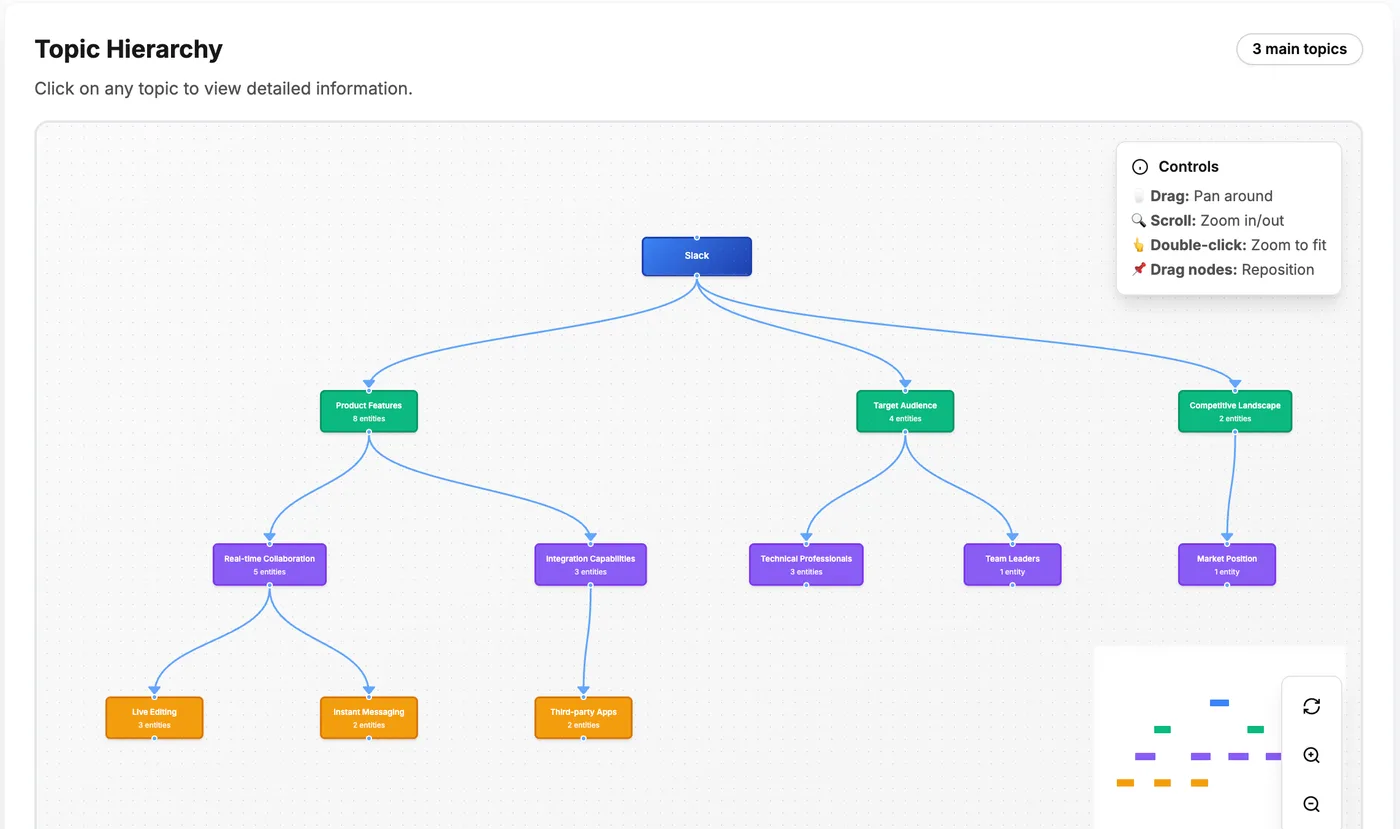
Map out your entire content strategy in one place. See how topics connect, where the gaps are, and what to create next – so nothing is left to guesswork.
Plan & strategy
Use the graph view to explore relationships and the table view to scan and filter. Plan and prioritize content that builds toward topical authority for LLM visibility.
Knowledge graph
See how topics and themes connect in a single map. Identify content gaps and opportunities so your strategy is grounded in clarity, not guesswork.
Topical authority for LLMs
Develop topical authority so you show up in LLM answers. Know where you lead and where to invest – and build visibility in AI search.
From entities to topics to content
Your content strategy lives in a knowledge graph. Here's how the pieces connect and how you turn strategy into publishable content.
What is a knowledge graph?
A knowledge graph is a map of things (products, features, themes, concepts) and the relationships between them. Instead of a flat list of keywords, you see how topics cluster, overlap, and support each other. Search engines and LLMs use similar structures to understand domains – so when your strategy is built as a graph, you're speaking their language and can plan content that actually builds topical authority.
In Topic Graph, your graph becomes the single source of truth for what to create next and how it all fits together.
The flow
Entities
The core "things" you want to be known for: products, features, use cases, or themes. These are the nodes in your graph and the foundation of your strategy.
Topics
Concrete content ideas derived from your entities – with funnel stage, content type, and intent. The graph shows how topics relate so you can prioritize and fill gaps.
Content
Briefs, drafts, and published pieces created from those topics. Every piece ties back to your graph, so your content calendar is aligned with your strategy. We handle this in Content Engineering.
How teams use Topic Graph
From content planning to competitive analysis.
Content Planning
Identify which topics to cover next based on semantic gaps in your content ecosystem
Trad + New SEO Strategy
Understand how search engines might relate your topics and optimize for topical authority
Competitive Analysis
Compare your topic coverage with competitors to find differentiation opportunities
AI Visibility
Ensure your brand covers all relevant topics that AI models associate with your category
Ready to Get Started?
Book a demo to see how Serplock can improve your brand's visibility in LLMs.